
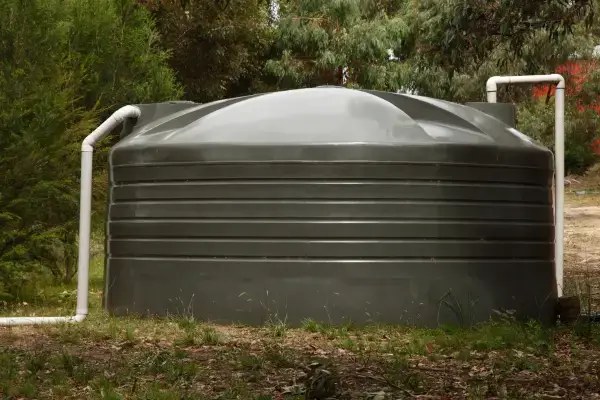
If your property relies on a bore or rainwater as its main water supply, filtration isn’t optional – it’s what makes that water safe to use. Most rural systems use a combination of sediment filtration, disinfection (usually UV), and sometimes taste or hardness treatment, depending on exactly what’s in your water. Here’s what typically matters for a Hawke’s Bay bore or rainwater supply, and how to keep it working properly once it’s installed.
Bore water vs rainwater: what’s actually in your water?
Bore water and rainwater carry different risks, so they usually need different filtration. Bore water typically contains sediment, hardness minerals and sometimes bacteria, while rainwater picks up dust, droppings and roof debris and can carry bacteria even when it looks perfectly clear.
Bore water often contains sediment – sand, silt and fine particles drawn up with the water – along with dissolved minerals that cause hardness or staining, and sometimes bacteria if the bore isn’t properly sealed or is relatively shallow. Tannins, the brownish, tea-like discolouration sometimes seen in bore water, are also common in parts of Hawke’s Bay with peaty or organic-rich ground.
Rainwater is generally cleaner at the source, but picks up contaminants on the way down and in storage: dust, bird and animal droppings, and debris from your roof and gutters can all end up in the tank. Without treatment, rainwater can carry bacteria even when it looks perfectly clear.
What filtration systems address each issue?
Sediment filters, UV disinfection, tannin and hardness treatment, and whole-house systems each address a different issue in a bore or rainwater supply. Most rural systems combine several of these stages, starting with sediment filtration and adding UV disinfection for any water used for drinking.
- Sediment filters trap sand, silt and particles before they reach your taps and appliances – usually the first stage in any rural system, bore or rainwater.
- UV disinfection treats bacteria and other microorganisms without chemicals, and is the standard treatment for both bore and rainwater supplies used for drinking.
- Tannin and hardness treatment (specialist media filters) address discolouration and scale-forming minerals specific to some bore water.
- Whole-house filtration systems, like our Puretec-based solutions, combine several of these stages so every tap in the house gets treated water, rather than just one point of use.
If you’re not sure exactly what your supply needs, our guide to choosing the right filtration system covers how to match a system to your actual water quality rather than guessing.
Keeping your system working: maintenance that actually matters
A rural water filtration system is only as good as its upkeep: filter cartridges need replacing on a schedule, UV bulbs usually need replacing annually, and the water should be tested at least once a year, whatever it looks or tastes like. Here’s what each involves.
- Filter cartridges need replacing on a schedule, not just when the water starts looking or smelling off. Sediment filters typically need changing every 3-6 months depending on usage and raw water quality, and more often on a heavily-used bore.
- UV bulbs lose effectiveness well before they visibly fail, and most need replacing annually even if the unit is still running – an ageing bulb can be disinfecting far less effectively than you’d expect, with no obvious sign anything’s wrong.
- Annual water testing is worth doing regardless of how the water looks or tastes, particularly for bacteria, since contamination isn’t always visible or detectable by smell. This matters even more if anyone in the household is more vulnerable to waterborne illness.
Signs your rural water system needs attention
Your rural water system needs attention if you notice discolouration, a change in taste or smell, or a drop in water pressure, or if it’s been more than a year since your last water test or filter change. Here are the signs to look for:
- Discolouration, a metallic taste, or a tea-like tint in your water
- A noticeable drop in water pressure, which can point to a clogged sediment filter
- A musty or chlorine-like smell that wasn’t there before
- It’s been more than a year since your last water test
- You can’t remember the last time a filter cartridge or UV bulb was changed
If your bore or rainwater supply seems to be affecting your water pressure as well, our guide to low water pressure covers what else could be going on, including issues specific to bore pumps.
Get your water tested
As Certified Master Plumbers, Gasfitters and Drainlayers, we service rural properties across Hawke’s Bay and can test and assess your bore or rainwater system. Book a water test or inspection with our team, or call us on 06 211 6462.

